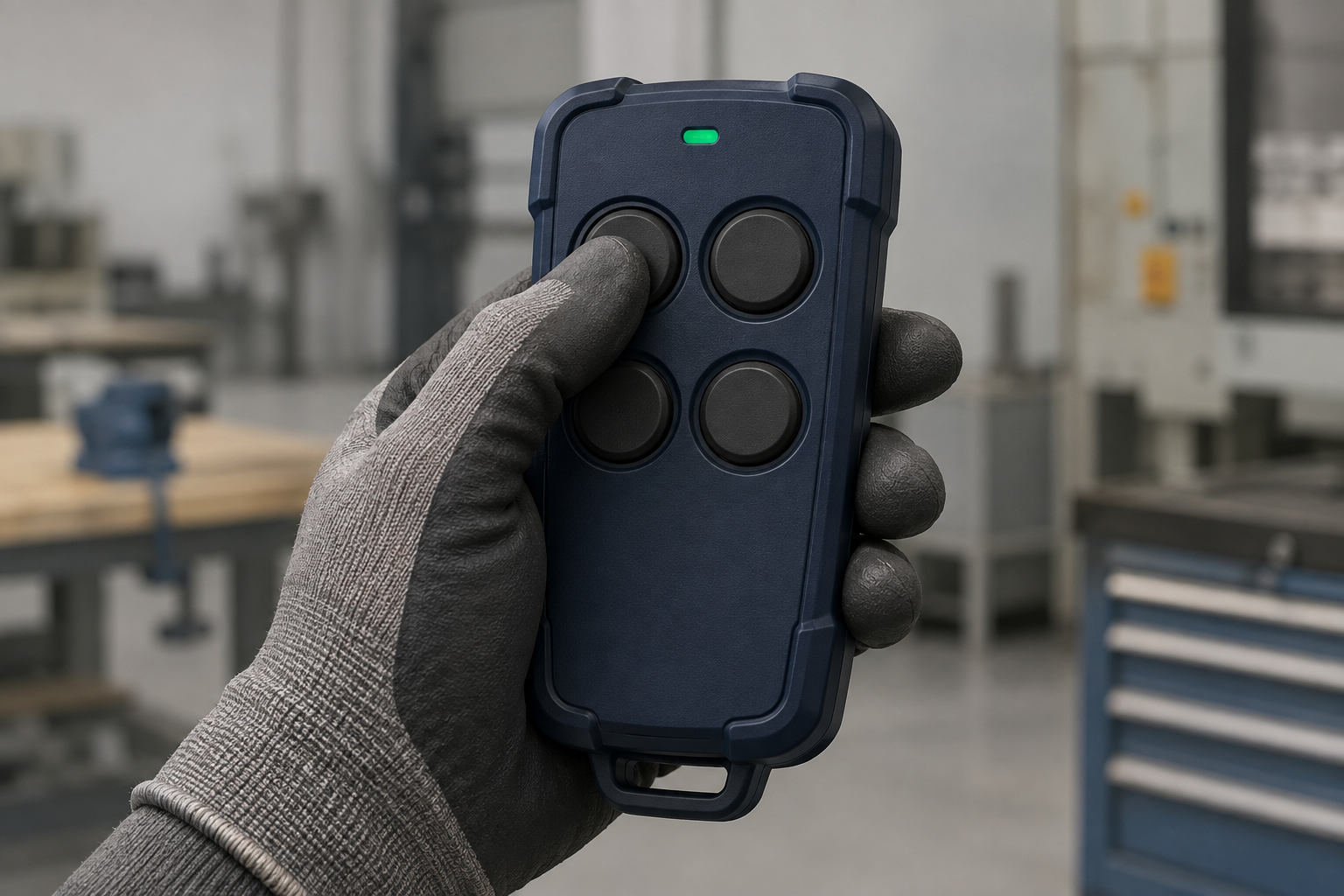
Choosing an RF Remote for Gloved Hands: Buttons, Grip, and Accidental Presses
A remote that feels fine at a desk can be awkward with work gloves. Check button separation, thumb reach, operating force, and carry position before approving the handset.
 ANRIVERSRF CONTROL
KNOWLEDGE CATEGORY
Practical frameworks for choosing transmitters, receivers and control modes.
A remote that feels fine at a desk can be awkward with work gloves. Check button separation, thumb reach, operating force, and carry position before approving the handset.
Yes, but battery life depends on the complete receiver’s average current, how it listens for commands, and how long its outputs stay active. Start with an energy budget and an acceptable response time.
A quoted RF range is usually a best-case line-of-sight figure. Learn how to estimate reliable working distance, find installation losses, and run a practical acceptance test before handover.
A relay remote can select fixed speeds, but smooth variable motion needs a changing command value plus the correct motor drive, VFD, valve amplifier, or machine controller.
A standard RF relay is suitable for normal stop commands, but it is not an emergency-stop device. A wireless E-stop requires a supervised safety link, defined lost-signal behavior, safety-rated outputs, and deliberate reset.
For dependable machine control, choose the wireless link by its dependencies and failure behavior—not by range alone. Dedicated RF suits immediate commands, Bluetooth suits nearby setup, and Wi-Fi suits monitoring and integration.