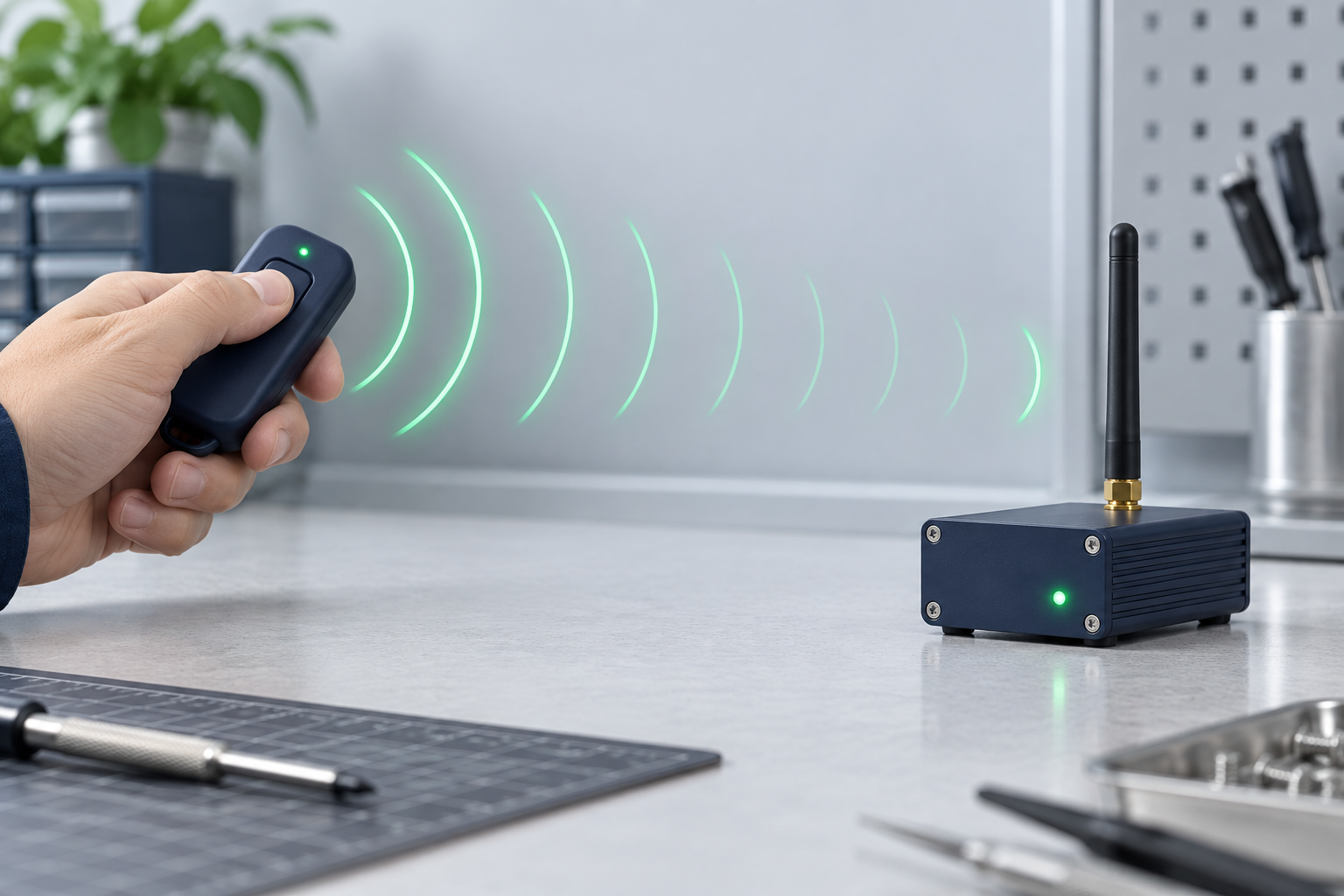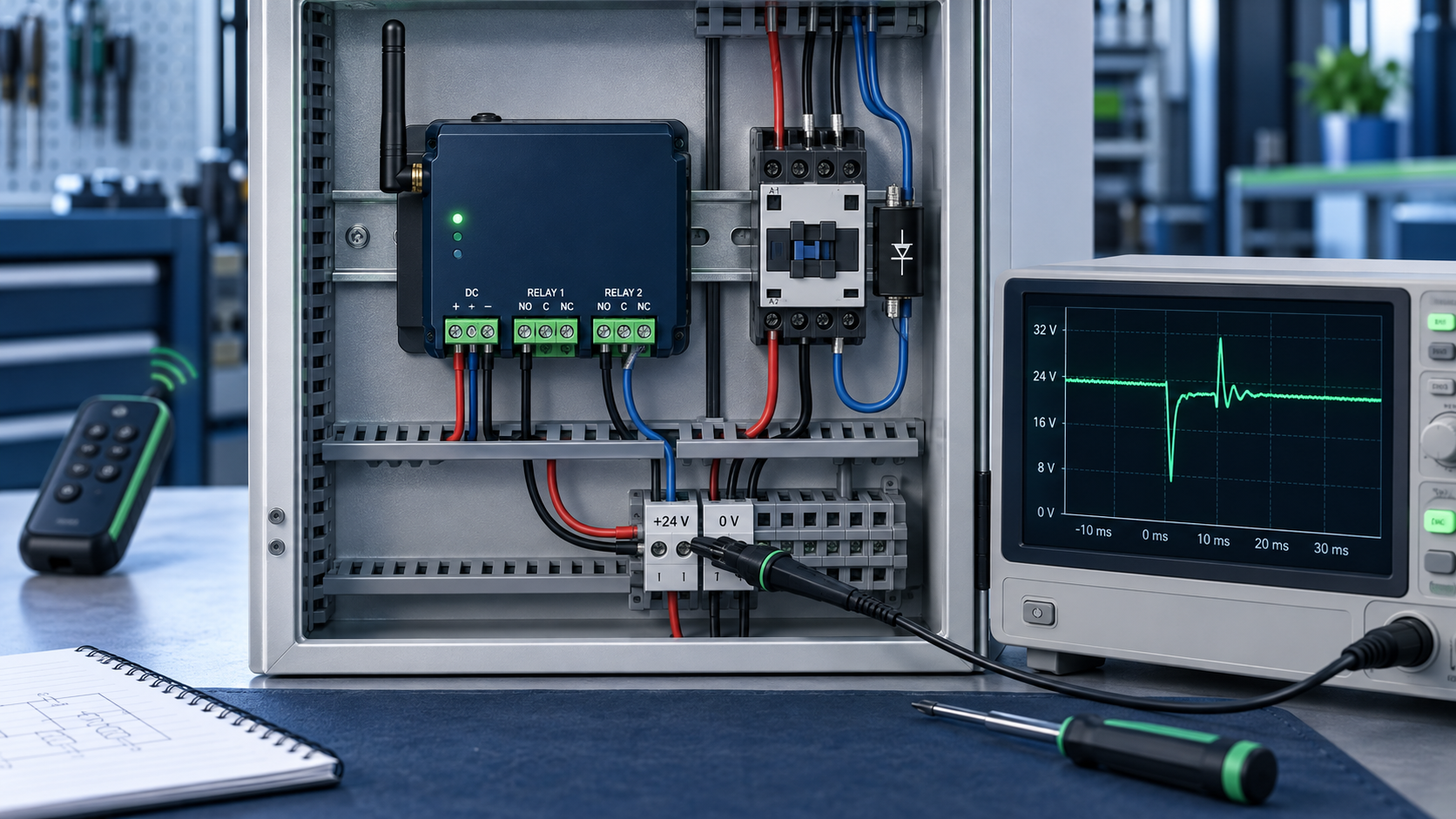
Why a 433 MHz Remote Works One Minute and Fails the Next
Intermittent RF control is usually a system problem, not simply a weak transmitter. Use this field-tested sequence to isolate interference, power, antenna, and load faults.
TECHNICAL KNOWLEDGE
Practical guidance on RF selection, system design, installation and troubleshooting—written for engineers, product teams and technical buyers.

Intermittent RF control is usually a system problem, not simply a weak transmitter. Use this field-tested sequence to isolate interference, power, antenna, and load faults.
A practical RF control specification guide covering load, control logic, range, frequency, coding, power and validation—so the first sample is built around the real application.
Relay mode describes what happens after a radio command, but not always after a power cut. Learn how to specify safe RF receiver restart and state recovery.

A transmitter LED only proves the button was pressed. Learn when one-way RF is sufficient, when feedback is worth the cost, and what should actually be confirmed.
ASK and FSK can operate on the same nominal frequency yet behave very differently around electrical noise. The modulation, receiver bandwidth, data rate and packet design must be evaluated as one radio link.

A sealed enclosure is only one part of outdoor RF reliability. Most field failures come from condensation, cable entries, mounting direction, and an antenna trapped behind metal—not rain falling straight onto the box.