Why a 433 MHz Remote Works One Minute and Fails the Next
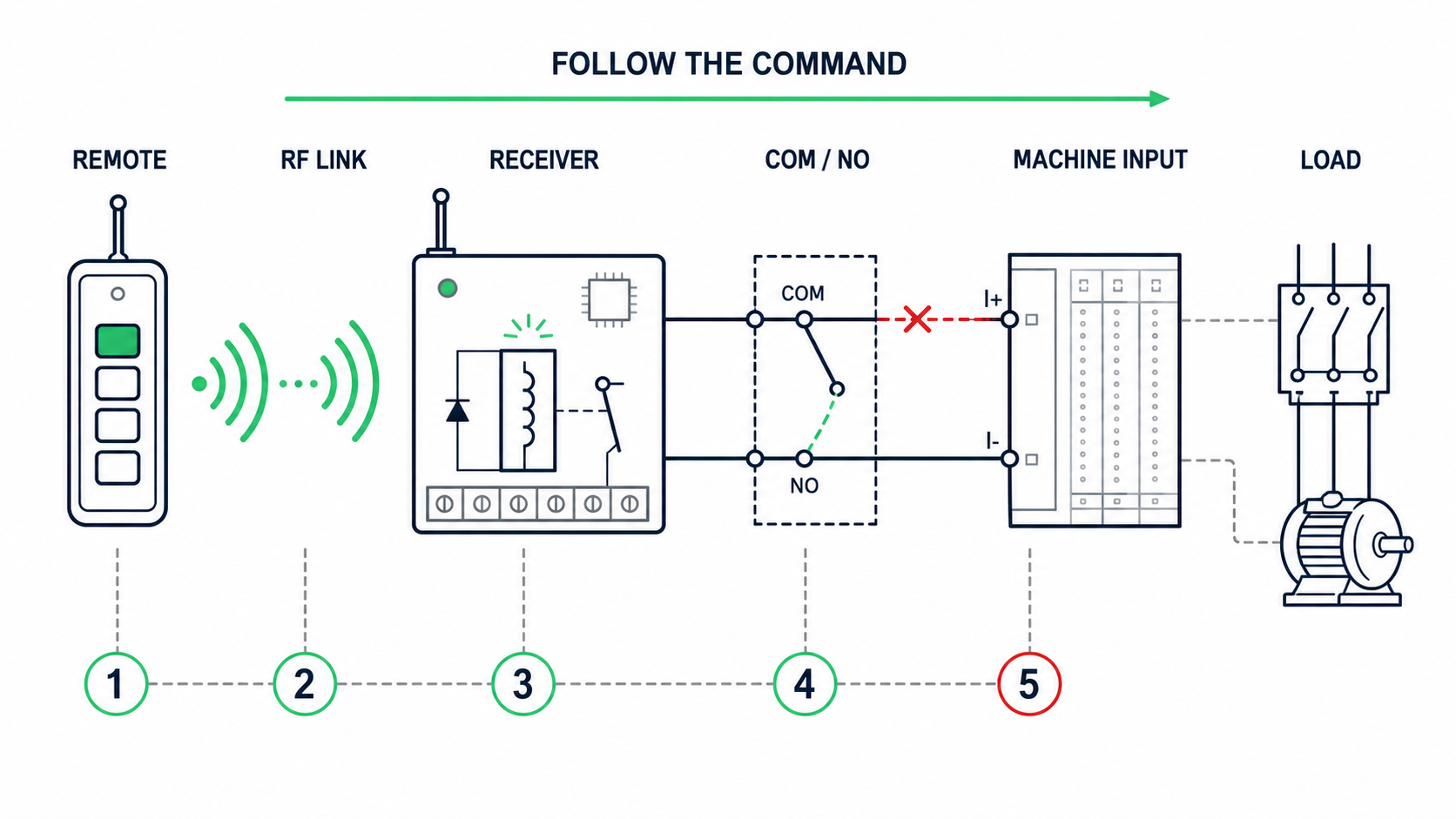
Intermittent RF control is usually a system problem, not simply a weak transmitter. Use this field-tested sequence to isolate interference, power, antenna, and load faults.
KNOWLEDGE CATEGORY
Wiring, commissioning and diagnostic guidance for dependable RF control.

Intermittent RF control is usually a system problem, not simply a weak transmitter. Use this field-tested sequence to isolate interference, power, antenna, and load faults.
Relay mode describes what happens after a radio command, but not always after a power cut. Learn how to specify safe RF receiver restart and state recovery.

A sealed enclosure is only one part of outdoor RF reliability. Most field failures come from condensation, cable entries, mounting direction, and an antenna trapped behind metal—not rain falling straight onto the box.

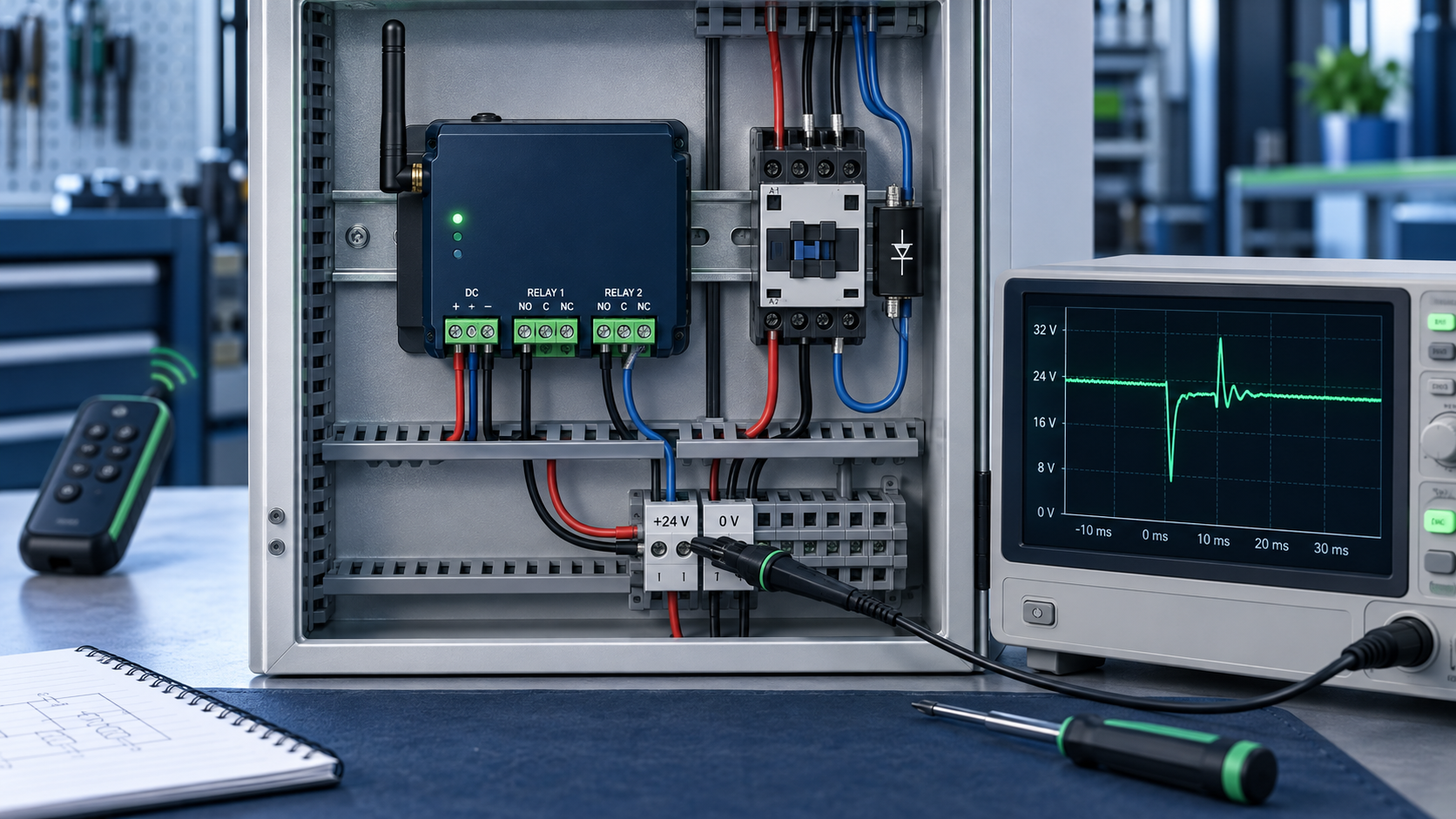
If an RF remote becomes unreliable only when a motor, contactor, or solenoid is energized, separate supply sag, conducted noise, and radiated interference before changing the antenna or radio.
Short battery life is rarely explained by cell capacity alone. Diagnose RF remotes through sleep current, transmit pulses, stuck keys, battery voltage sag, temperature, and real operating time.
A field guide to receiver-side RF security: command freshness, controlled pairing, credential revocation, function permissions, and practical hostile-case testing.